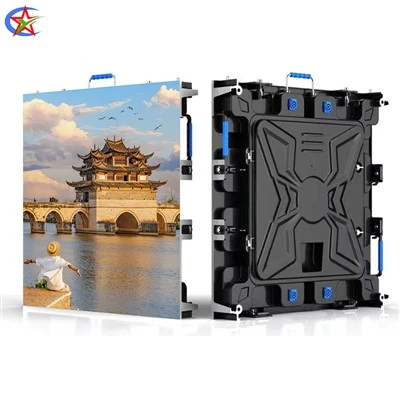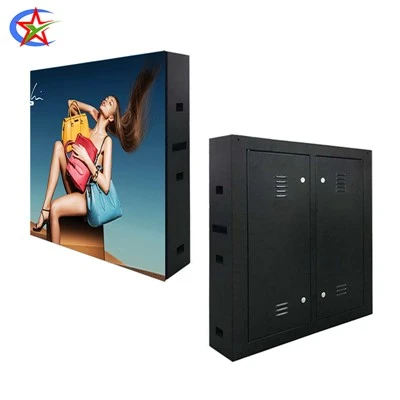
Pixel pitch is a crucial factor in determining screen display quality and model. Smaller pixel pitch results in higher pixel density, making it more suitable for high-definition content playback. Pixel pitch and transparency present a trade-off. Viewing distance is also important for product model selection. Generally, larger screen sizes are preferred for farther viewing distances, while smaller screen sizes are better for closer viewing distances. Screen transparency is a key indicator, with transparency ranging from 20% to 85%. High transparency does not affect building lighting and ventilation.
The system primarily uses surface-mount (SMD) packaging, offering good heat dissipation, uniform color, and front-side maintenance. Driving methods include constant current, regulated voltage, and constant voltage-constant current, with the constant voltage-constant current drive circuit considered to offer superior performance in some applications. The control system employs PWM (Pulse Modulation) control, resulting in high conversion efficiency, stable output voltage/current, and a refresh rate typically above 1920Hz, ensuring flicker-free display.
Various installation methods are available, including fully concealed frame, semi-concealed frame, exposed frame, wall-mounted, and frameless installations, which must be selected based on the actual site conditions. The external structure must be able to adapt to non-planar shapes such as arcs, fans, triangles, and circles, requiring high standards in research and development and manufacturing processes. The product is lightweight and thin, facilitating transportation and installation without the need for complex steel structures. It possesses a high protection rating (e.g., IP67), is waterproof, dustproof, and resistant to high and low temperatures and humidity, allowing for long-term use in harsh outdoor environments. Utilizing high-performance raw materials, it possesses UV resistance, fire resistance, and a wide operating temperature range.